Filter types and their roles
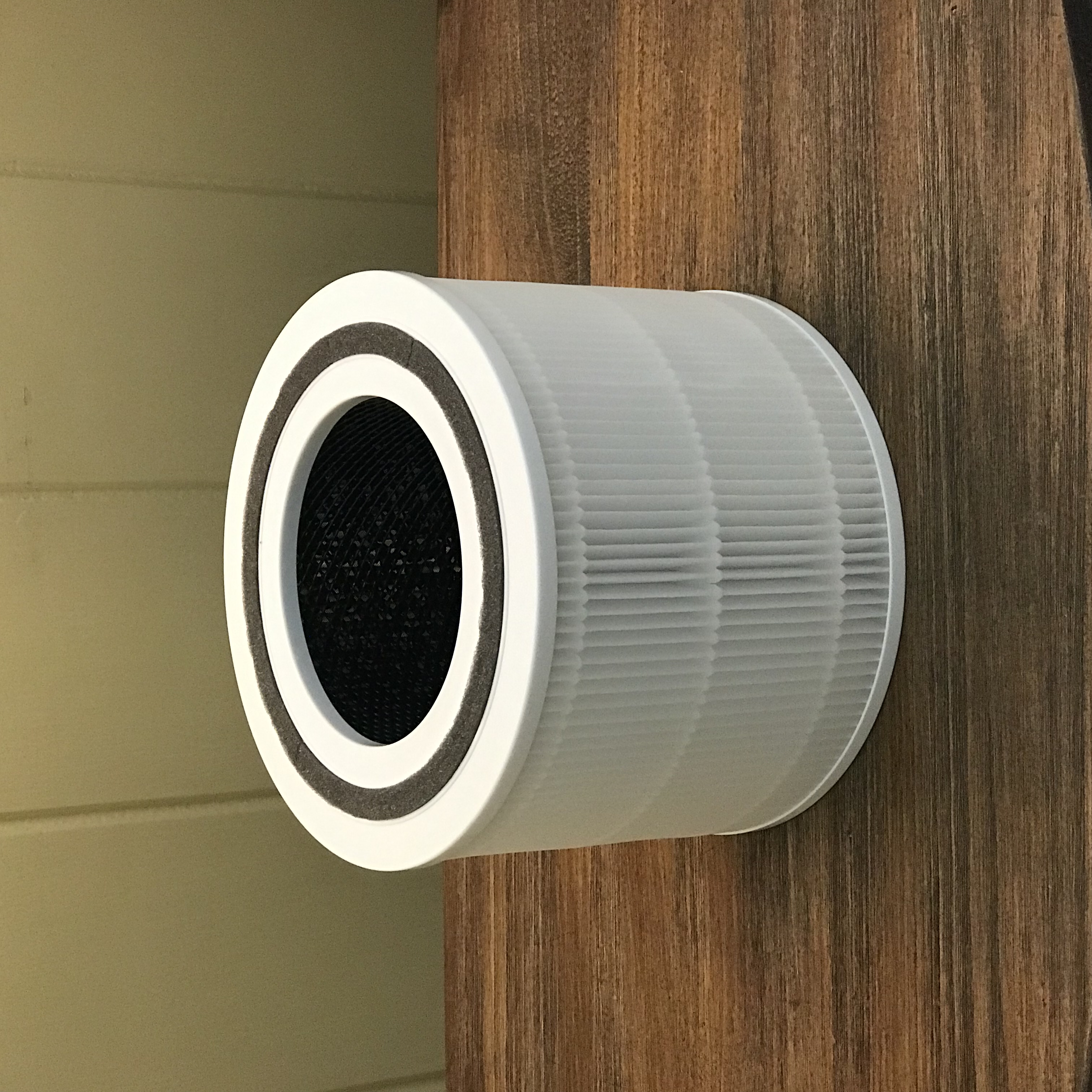
Most residential air purifiers sold in the Czech market use a staged filtration system: a coarse pre-filter, a HEPA layer and an activated carbon layer, sometimes combined into a single unit. Each stage captures different contaminants and has a different operational lifespan.
Pre-filters (G3, G4, E10)
Pre-filters catch large particles — dust, pet hair, lint — before they reach the HEPA layer. They are classified under European standard EN ISO 16890 (previously EN 779): G3 and G4 are coarse-grade; E10 is fine. Most consumer purifiers use a foam or fibre pre-filter in the G3–G4 range.
Pre-filters are typically washable. In Prague or Brno apartments on streets with significant traffic, a monthly rinse under cold water and air-drying before reinstallation is a reasonable schedule. Visual inspection is the best guide — a pre-filter loaded with visible grey-brown dust that does not rinse clean should be replaced rather than reused.
HEPA filters (H13, H14)
HEPA (High-Efficiency Particulate Air) filters meeting EN 1822 class H13 capture at least 99.95 % of particles at 0.3 µm — the most penetrating particle size — in a single pass. H14 filters raise this to 99.995 %. Most consumer devices use H13.
HEPA filters are not washable. Water damages the fibre structure, reducing particle capture efficiency even if the filter appears intact after drying. The filter must be replaced as a unit.
Manufacturer replacement intervals for HEPA filters typically range from 6 to 12 months at "normal" usage (3–4 hours per day). In Czech conditions during winter heating season — when wood burning is common in areas outside major cities, and PM2.5 levels in urban areas regularly spike during temperature inversions — a HEPA filter in continuous operation may saturate in 4–6 months.
Activated carbon filters
Activated carbon adsorbs gaseous pollutants: volatile organic compounds (VOCs), formaldehyde, cooking odours, NO₂ and similar low-molecular-weight gases. The carbon surface area available for adsorption is finite — once saturated, the filter no longer captures gases and may begin to release previously adsorbed compounds if conditions change (temperature increase, for example).
There is no reliable way to test carbon saturation at home. Time and exposure are the practical guides. In a kitchen environment with frequent cooking, a carbon filter saturates faster than in a bedroom. Most manufacturers recommend replacement every 3–6 months for carbon layers; in high-exposure environments 3 months is a safer interval.
Filters in HRV and ventilation units
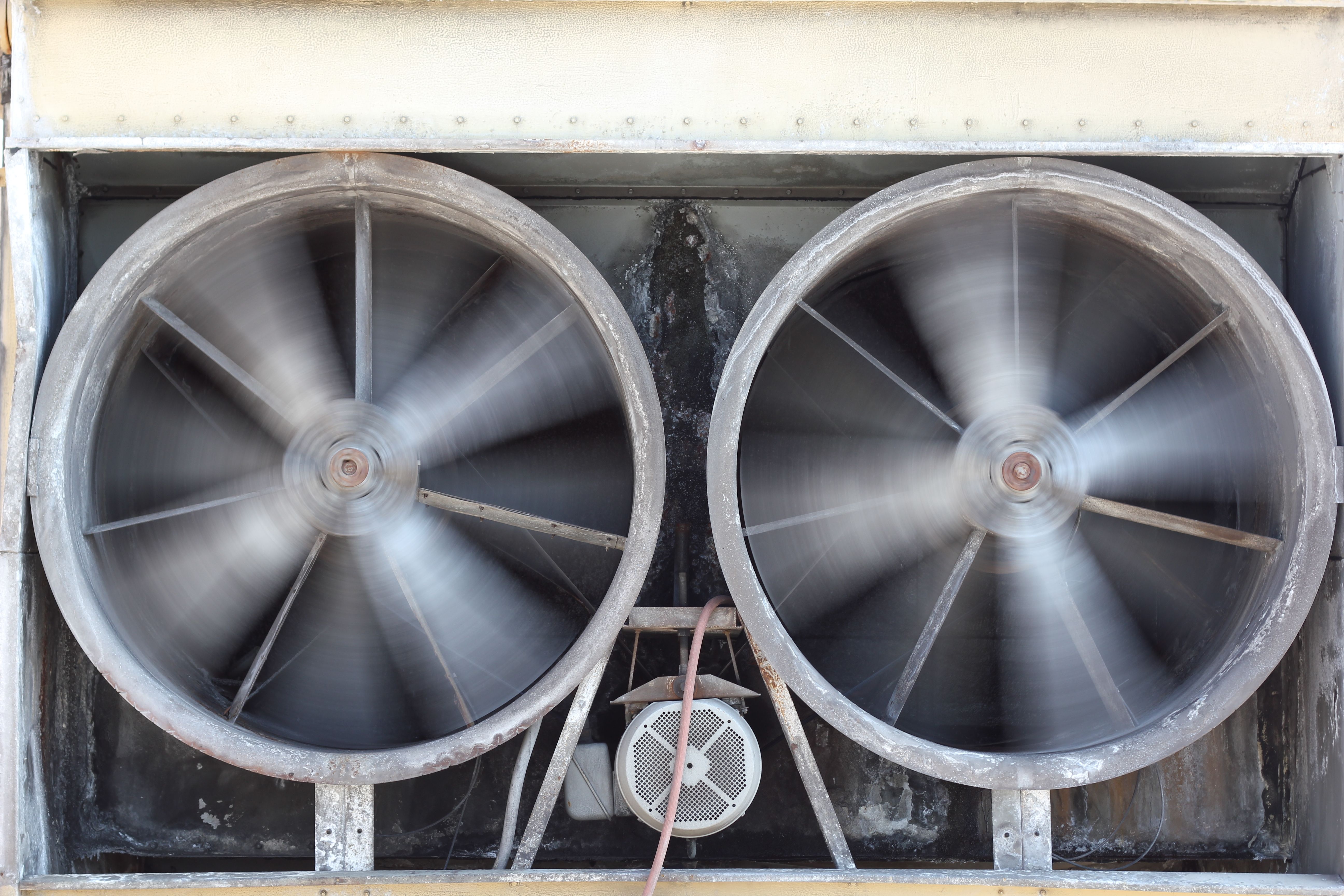
Heat recovery ventilators (rekuperace) use separate filters on both the intake and exhaust air streams. The intake filter protects the heat exchanger from incoming outdoor dust; the exhaust filter stops lint and household dust from fouling the exchanger on the interior side.
G4 intake filters
The intake filter in most residential HRV units is a replaceable pad or cassette in the G4 class. Czech cities produce elevated particulate loads during winter inversions; Prague and Ostrava show regular PM2.5 and PM10 exceedances in ČHMÚ monitoring data. In urban installations, checking the intake filter every 4–6 weeks during November–March and replacing it when visibly loaded — not simply at a calendar interval — is more effective than following a fixed schedule.
Exhaust filters
Exhaust filters in HRV units load more slowly than intake filters but should be replaced at the same interval to maintain balanced airflow through the heat exchanger. Unbalanced flow — where one side is restricted — reduces efficiency and can create slight positive or negative pressure differences between the unit and the room, which affects how well internal doors stay closed and how much noise the unit produces.

Indicators that a filter needs attention
Not all devices have a filter-life indicator, and those that do rely on operating hours rather than actual filter loading. The following observations indicate a filter should be checked:
- Airflow from the device feels weaker than usual at the same fan speed setting.
- A PM2.5 monitor in the same room shows no improvement when the purifier is running — or readings are higher than expected.
- A musty or stale odour when the device starts, particularly after a period of non-use.
- The pre-filter appears uniformly dark grey-brown across its full surface with visible dust accumulation in the fibres.
- For HRV units: the unit runs at higher speed than usual to maintain the same airflow setting, or flow measurement across supply vents shows a drop of more than 15–20 % from baseline.
Replacement filter sourcing in Czechia
Replacement filters for popular brands — Xiaomi, Philips, Dyson, Blauberg — are available through major Czech electronics retailers (Alza, Mall, Datart) and directly from brand e-shops. Third-party compatible filters are often cheaper but quality varies significantly; filter media that does not meet H13 specifications may be sold with misleading labelling.
For less common HRV brands — particularly Eastern European and German units — filters are sometimes only available through the manufacturer's authorised distributor. Checking the unit's model number against the replacement filter part number before purchase avoids the common mistake of ordering a physically similar but dimensionally incompatible filter.
Disposal
Used HEPA and carbon filters are classified as mixed waste in Czech municipal waste regulations — not hazardous waste — and can be disposed of with general household rubbish. They should not be shaken or tapped to remove dust before disposal; the captured particles (including PM2.5 and any biological material) would be released into the air. Seal the old filter in a plastic bag before removing it from the device.
A practical maintenance calendar for Czech conditions
- Monthly (November–March): Visually inspect HRV intake filters; rinse pre-filters if loaded.
- Every 3 months: Replace activated carbon filter in air purifiers used in cooking areas.
- Every 4–6 months: Replace G4 intake/exhaust filters in HRV units in urban or suburban Czech locations.
- Every 6 months: Replace HEPA filter in air purifiers running 8+ hours daily.
- Annually: Remove and wash HRV heat exchanger core; replace HEPA filter in devices running 4 hours or less daily; review all seals and gaskets in the ventilation unit.